Brothers in Arms: Road to Hill 30
May 1, 2026

"I never asked to be squad leader."
I started Brother in Arms as another one of those off the wall thoughts of mine. I remember this game from way back in the day, I wonder if it holds up? Been playing lots of war games recently, not really sure why. I guess its the hero stories of normal joes, going up against the impossible that we don't really see much in gaming anymore. Maybe I'm tired of hero's having to be super to get any kind of mainstream attention now days. I most certainly am tired of a very specific style of writing quippy characters that riff off of one another in this cringe way, almost as if there can never be a moment of silence without talking. All these things, games from our past do not have these qualities. However, games from our past always possess qualities of gameplay that we learned from, and playing these older games show you that we truly have come a long way when it comes to game design. So how does Brothers in Arms hold up to the standards that we have now?
In many ways, Brothers in Arms is your average run of the mill military shooter from the early 2000s. You got your sergeant who is tough on the squad but cares a lot about them, the smart ass character always giving the sarge a hard time, the dorky one who never really belonged in a place like this, and a myriad of other war time tropes we've all seen before. What really makes this game stand out above the others of the time is YOU become a squad leader. The game starts pretty normal, you run around shoot some dudes, nothing special. You are then found without a ranking officer, and you, as the highest rank, are now sergeant. You are given up to 2 squads to control at any given time, and can command them to perform a few tasks while assisting you in your objective.
Although the list of commands is criminally small, the game takes a lot of liberties with how the AI navigates receiving and fulfilling your commands. The simplest of which is "you guys move over there", and the AI will navigate towards where you mark while shooting at enemies in their line of sight. You can instruct your men to shoot at targets, and even charge a position if you are bold. The AI will also automatically take cover if cover is nearby, however if they do not, or if they are caught out of position, you have the ability to tell the squad to take cover, which they perform relatively well. However, if you do find yourself making a bad call, or being out of position, the enemy soldiers are quite good at placing a shot when they have one. You and your squad mates can only take a few shots before its curtains, so best not find yourself out of position.
I really like how the game is punishing for a bad leadership call. You really feel your mistakes have some sort of weight, and often times when a mistake is made, you kinda have to restart the chapter otherwise you are almost up against a brick wall it feels at times. This is both good and bad in my opinion. On one hand, you really feel like you have agency over the outcome of the scenario based solely on your ability to make good decisions. On the other hand, sometimes not all encounters are fair - especially in a game from 2004, some of the missions really felt like I was barely making it by the skin of my teeth. Even frustrating at times, but that was pretty rare over the course of the campaign. I feel like a lot of these older war games ramp up the difficulty towards the end to make it feel nearly helpless, but I don't know if that was to emulate how bad and helpless war really was, or if that was a way to artificially lengthen the game by making it take a little longer because of the spike in difficulty.
Brothers in arms, like to other war games of this era, ended up being a little frustrating at parts, due to factors that were largely a product of the time. However, I ended up really enjoying the game as a whole. Unlike call of duty, I feel that Brothers in Arms is a series that I’m not entirely compelled to play every entry, especially when many of those entries were mobile games for some fucking reason. I feel like the next logical step to see how the game truly progressed is to play the third installment which came out on the next generation of consoles. I feel that the amount of time between generations should be enough to see significant differences between the original, especially since it seems like the second game is more like an expansion to the first, which I am not craving more of this gameplay loop at this time of this writing.Maybe by the 3rd installment will the ideas of controlling the squad be fully realized. I do think there’s something special here, but there was just enough weirdness to keep me from really enjoying to its fullest potential. I likely will keep on track with my hyper fixative mind, and see how the next versions of the game can expand on this formula.
B-


Saros
May 7, 2026

"The sun is forever."
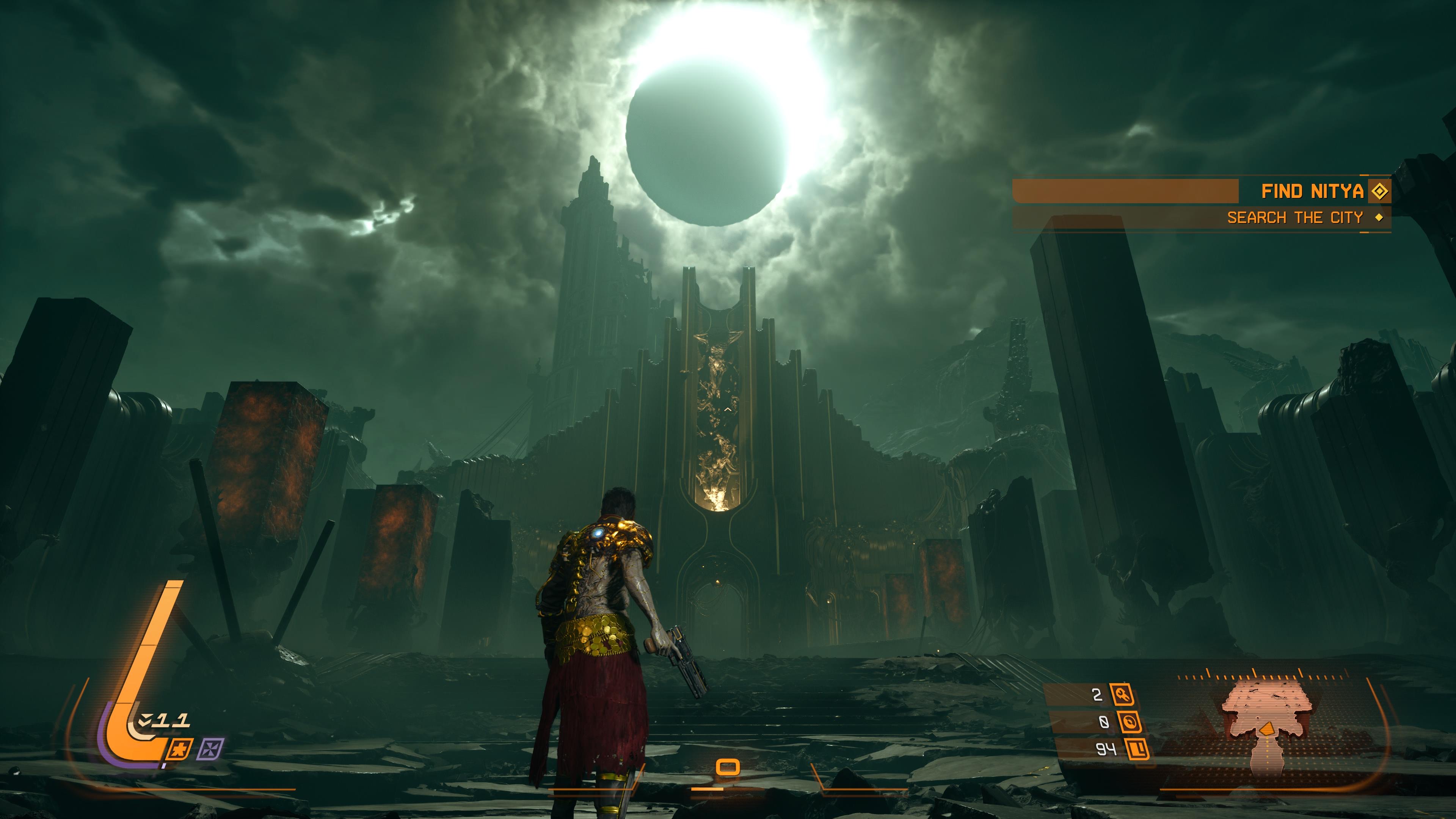
Housemarque. I developer I had not heard of until the I first bought the PS5 and Returnal. I cannot remember who recommended Returnal originally to me, but it ended up being one of my favorite games of that console. Great tight gameplay, fun story tro uncover, and roguelike/bullet-hell elements that fit perfectly into a package together. When I caught wind last year they were making another game, I was beyond excited! I would have been happy with Returnal 2, or just more of that gameplay. I was so happy to see that Saros, was just more Returnal, in the gameplay department that is.
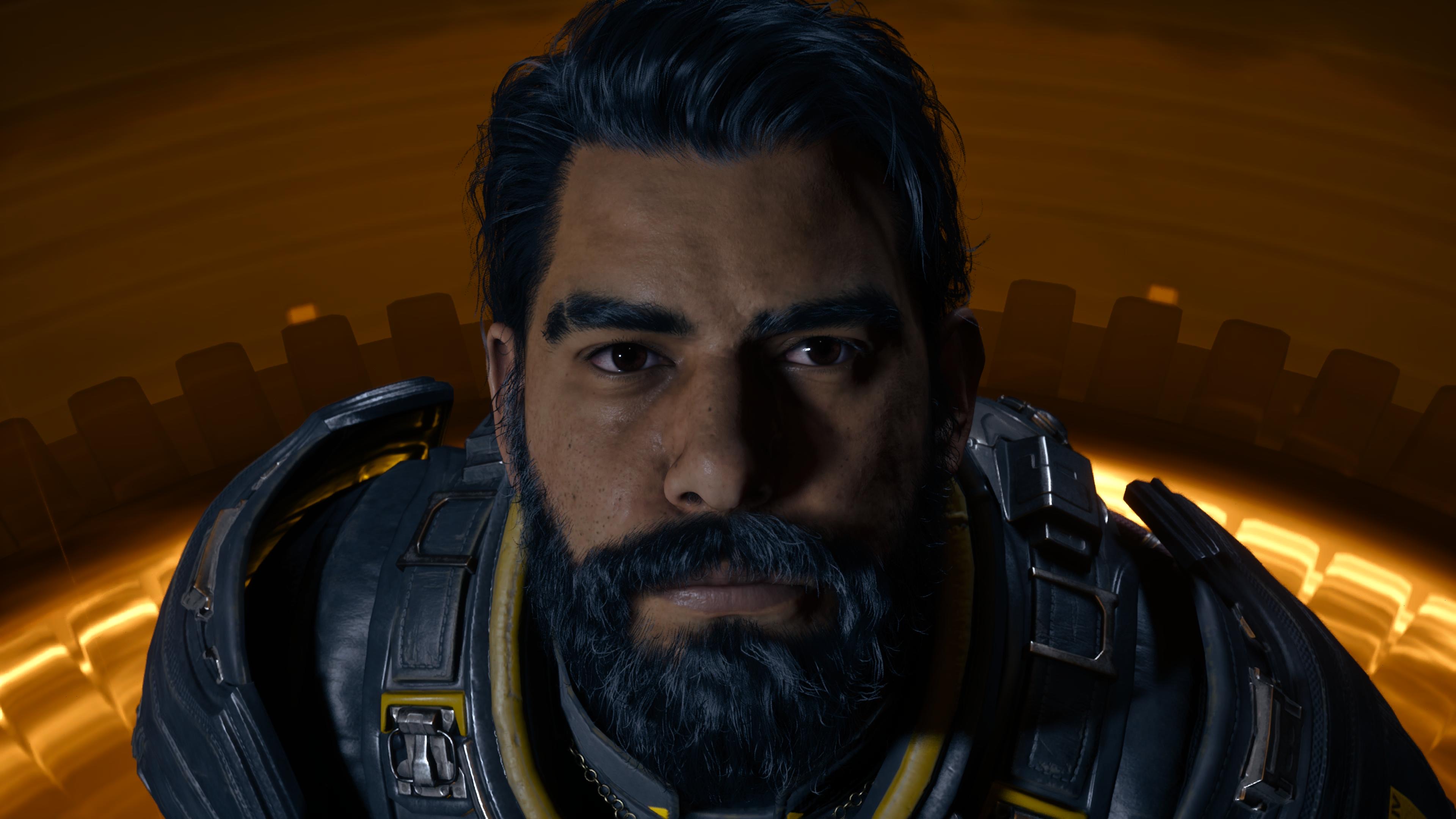
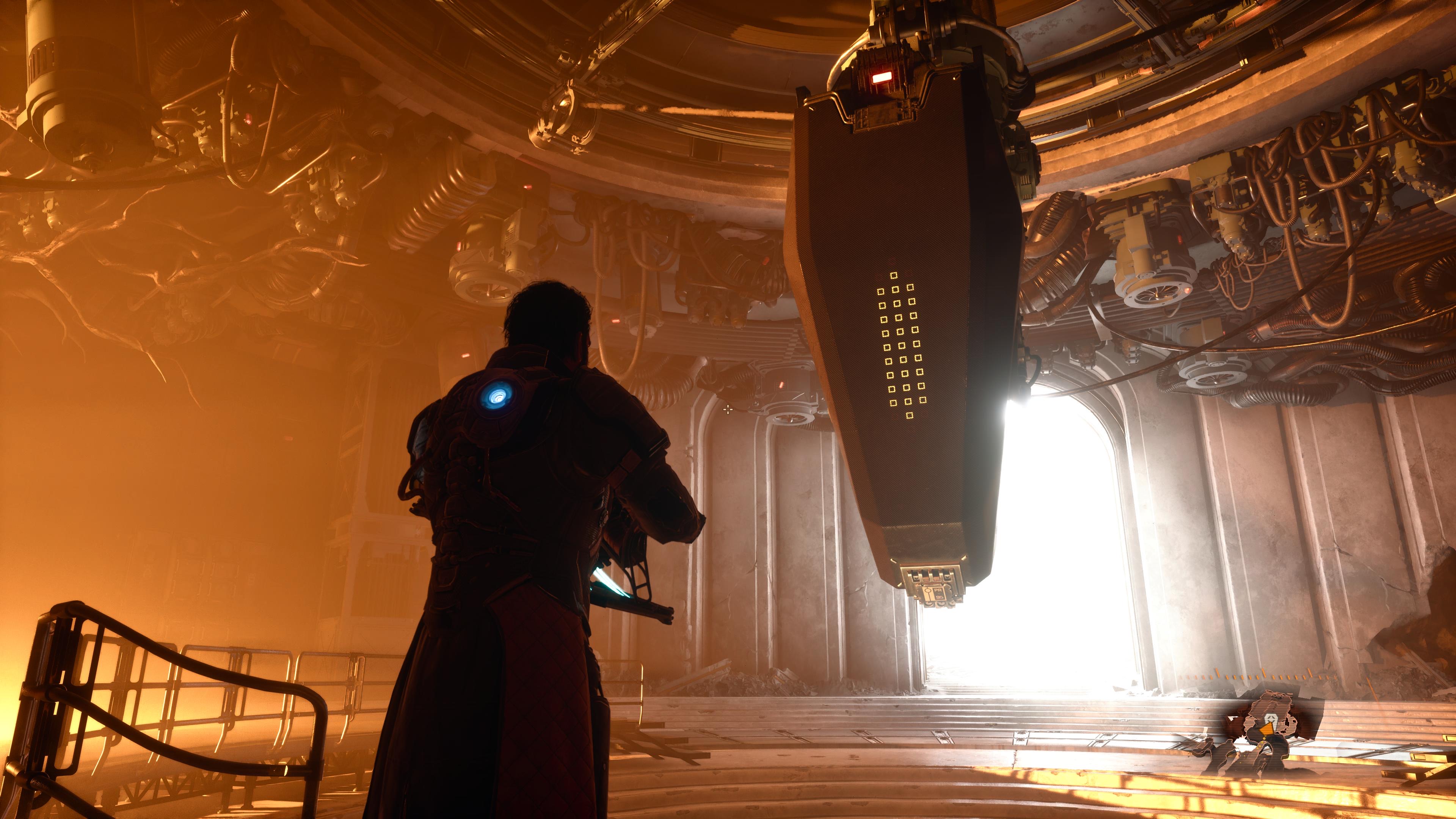
With a completely new Story and setting, Saros simply isn't an expansion to Returnal which was very welcome. In a world were the Suns eclipse destroys the world, and things come back different every time, the main protagonist, Arjun, sets out each and every time to try to uncover the secrets of Carcosa. Through a slow drip feed of story, much like Returnal, you get bits and pieces to what happened to the world, and the other expeditions before your crew of Echelon IV. To see the world and the characters change around you in this maddening spiral was really enjoyable to see. The way the story is structured around runs, successful or not, was a great reward for doing well, and a great incentive to do better. Ultimately cultivating in flashbacks, and big reveals that set the stage for Arjuns past, and understanding his motive, and his future. I like how the story was unreliable, and I think the reveals when you "beat" the game, give you context for all of your troubles up until that point.
On first playthrough, Saros was a delightful experience while you were unlocking upgrades and getting stronger every run. However, the "stronger every run" approach I think shot itself in the foot. Perhaps for someone who is not a super pro max gamer like myself, Saros would feel more challenging to the point where the power curve after fighting and losing over and over would naturally make the gamer feel easier. For me, I feel like Saros got too easy too fast, and once I had beaten some bosses and gained a lot more upgrades via the skill tree, the game almost felt trivial during the normal runs.
Housemarque made Saros more approachable, and in doing so I believe they alienated their core fan base. Returnal was a difficult game where wise choices paired with upgrades, like better proficiency, more healing, second chance, made the game easier to get through its core run. There was a decent amount of build variety with its corrupted augments and weapon mods, which felt impactful. I don't feel the same about Saros. For my playthrough, especially near the end when your stats are near max and every augment you pickup has the chance to completely corrupt that stat, I didnt really feel a need to do a certain build per run. I just kinda chose my favorite weapons and moved on when something of higher proficiency came along, and it didnt really seem like any of the mods really altered the outcome, which was a bit disappointing. It's like Saros wanted to be a roguelike, but Housemarque was too scared to make one again. However if they made another, people would be upset they just didnt make Returnal 2. Damned if you did, damned if you didnt.
All that to say, Saros is not a bad game by any margin. I thoroughly enjoyed my playthrough, up until the end where I really felt like the build variety didnt matter, and the game to me became trivial. The combat is tight, the music is great, bosses were good on first few runs, but again became trivial later on. The weapons left something to be desired, along with the augments - I really wish they had more impact, but Returnal did add a more "true" roguelike mode into the game about a year later, so maybe Saros will get the same treatment.
I think Saros is definitely worth buying, it is a triple A experience with a fun twisted story, and great gameplay. I would love to see some updates in the future. Until then, theres not really a reason to replay, unlike its predecessor Returnal, which I almost immediately wanted to play again after finishing Saros.